
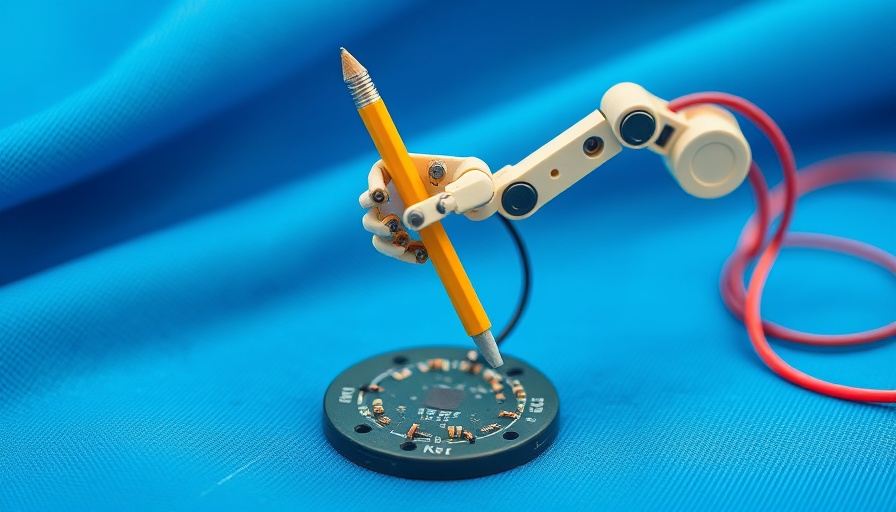
The Rise of Self-Aware Robotics: Understanding Machine Bodies
In an exciting leap for robotics, MIT's Computer Science and Artificial Intelligence Lab (CSAIL) has pioneered the Neural Jacobian Fields, a groundbreaking vision-based system that empowers machines to understand and control their own bodies using only visual input from a single camera. This advancement has profound implications for the future of robotics, moving from basic automation to more intuitive and adaptive machines capable of complex interactions with their environments.
Why Vision-Based Intelligence Matters
Traditionally, robotic control systems relied heavily on multiple sensors for perception and interaction. However, the newly developed system minimizes this dependency by using visual data alone, which can drastically reduce costs and complexity. By teaching robots to identify and control their movements, we are ushering in a new era of efficiency and versatility in robotics, enabling machines to perform tasks in dynamic settings, be it in industrial applications or everyday home environments.
Potential Applications and Implications
The applications for self-aware robotics span various sectors, including healthcare, manufacturing, and entertainment. For instance, robots equipped with the Neural Jacobian Fields could assist in elderly care by navigating through homes while avoiding obstacles that could pose risks. Furthermore, as these systems evolve, we might see enhanced cooperation between humans and robots, fostering a future where both work in harmony for improved productivity and safety.
Challenges to Overcome
Despite its promising potential, integrating this technology into broader applications comes with challenges. Issues such as ensuring reliability in diverse environments, addressing ethical concerns related to machine autonomy, and developing robust safety measures will be pivotal in transitioning from concept to widespread implementation.
As the landscape of robotics continues to evolve, staying informed about these advancements is essential. The ability of machines to "know themselves" can lead to smarter, more adaptable systems that may redefine how we interact with technology. Embracing this knowledge will not only equip us with insights into current innovations but also prepare us for the transformative impacts they will have on future industries.


Write A Comment