
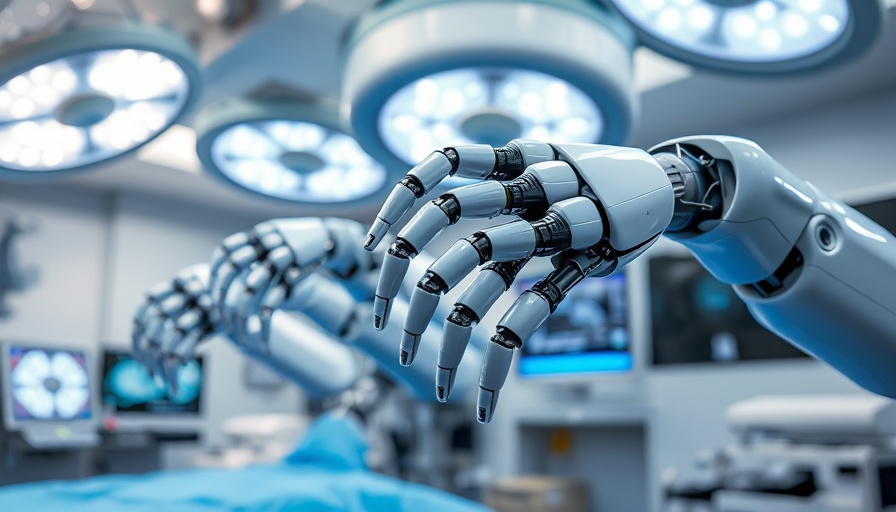
Revolutionizing Surgery with AI: Precision at Its Best
In a groundbreaking development, an AI-controlled robot has successfully performed gallbladder removal surgery with remarkable precision, achieving an astonishing accuracy rate of 100 percent. This leap in medical robotics not only showcases advanced technology but also opens the door to safer patient outcomes and a transformation in surgical procedures. As we enter an era dominated by artificial intelligence, it is crucial to explore the implications this technology holds for the future of healthcare.
The Rise of Medical Robots: A New Era in Surgery
Robotic surgery isn't entirely new; however, the integration of AI into these systems marks a significant step forward. Traditional robotic systems often rely heavily on human surgeons for guidance, but AI's capability to analyze massive datasets allows for enhanced decision-making during procedures. This innovation could minimize human error, reduce recovery time, and lead to better overall patient care.
Safety and Efficiency: Why AI Matters
One of the most compelling advantages of AI in surgery is the potential for increased safety. The AI system can quickly process real-time data during the procedure, allowing for modifications on-the-fly and promoting an interactive relationship between the robot and healthcare professionals. If such systems continue to evolve, hubs of rapid surgical innovation could emerge, significantly propelling patient safety standards.
Challenges Ahead: Ethical and Practical Considerations
Despite the promises of AI surgery, there are challenges that remain. Concerns about the ethical implications of replacing human surgeons with robots and the potential for technological failures must be addressed. Ongoing discussions within the medical community involve balancing the benefits of AI with patient-centered care approaches. As technology progresses, it’s essential to maintain a focus on human oversight, ensuring that these advanced systems work alongside skilled professionals.
Looking Forward: The Future of AI in Healthcare
The successful deployment of AI-controlled robots in surgical settings marks just the beginning. As more hospitals embrace these technologies, we can expect transformations across the entire medical landscape. From diagnosing conditions more accurately to personalizing patient treatments based on AI insights, the future holds vast possibilities. Those engaged in healthcare should stay informed on these advancements, as they may soon reshape medical practice as we know it.


Write A Comment